
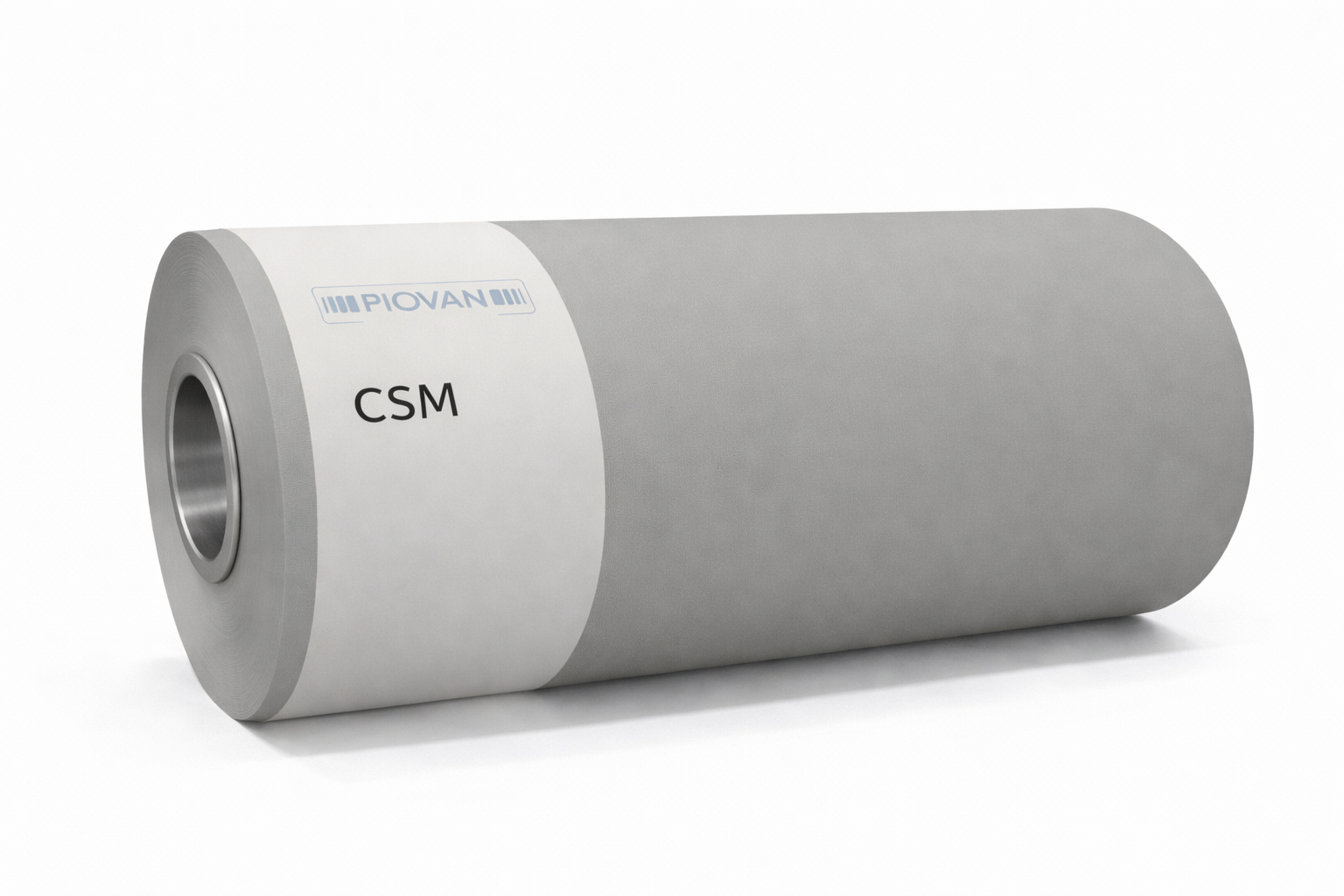
CSM (Chlorosulfonated Polyethylene Rubber — Hypalon®)
The CSM is a strategic choice for rubber-coated industrial cylinder linings because it provides:
- Absolute protection in processes involving acids and strong oxidants: In industrial cylinders used in chemically extreme environments, CSM linings are often the only viable solution. Its virtually unique resistance to strong oxidizing acids such as nitric and sulfuric acid, and to oxidizing agents such as ozone and hypochlorite, ensures lining integrity where any standard rubber would rapidly degrade, compromising the cylinder and the production process.
- Stable lining under multiple and simultaneous stresses: CSM rubber-coated cylinders are the rational choice for complex industrial applications where environmental variables change and overlap. CSM simultaneously manages exposure to UV rays, weather, contact with oils, and high temperatures up to +130°C—keeping the lining intact and functional even when operating conditions vary unpredictably over the life of the system.
- Structural longevity for cylinders in heavy-duty industrial environments: The molecular structure of CSM gives the cylinder lining superior abrasion resistance and mechanical toughness compared to most elastomers of the same class. This makes it particularly suitable for cylinders subject to intense mechanical wear, where the lining must guarantee decades of operation without re-rubberization.
- An investment that pays off in operational continuity and safety: The higher cost of CSM compared to alternatives such as EPDM or NBR must be considered in terms of the cylinder’s total cost of ownership. In safety-critical sectors, a lining that prevents failures, process losses, or environmental contamination drastically reduces unplanned plant downtime and the associated operational risks.
General Features
The mechanical performance of the CSM is excellent and stable over a wide operating range.
Working temperature: typically ranges from -35°C to +140°C, with temporary peaks up to +160°C, ensuring superior thermal stability compared to CR and NBR.
Hardness range: very versatile, covering a range from 45 to 90 Shore A, allowing the production of components ranging from flexible membranes to rigid high-pressure seals.
Abrasion resistance : Rated as excellent, superior to that of Neoprene and EPDM, making it ideal for protective coverings subject to trampling or mechanical rubbing.
Tensile strength: high (15–22 MPa ),
Compression set: is considered good (25–40% at 100°C/24h), especially when compared to other heat-resistant elastomers.
Tear resistance: The material also boasts excellent tear resistance
Dielectric strength: exceptional, allowing its use in critical electrical insulation exposed to chemicals.
Color stability : It is superior to almost all other elastomers, allowing for colored formulations that do not fade under the action of UV rays.
Resistance to air and oxygen: Resistance to aging in air is excellent. Even in the presence of pure oxygen or air at high temperatures, CSM does not exhibit the embrittlement or softening typical of less stable natural or synthetic rubbers. Its structure prevents polymer chain splitting, maintaining its elastic properties for decades.
Resistance to UV light and photooxidative agents : Resistance to UV rays is at the highest levels in the industry. CSM is widely used for roofing membranes and for boats (premium inflatable boats) precisely because it does not undergo photochemical degradation. Unlike many other materials, it maintains color brilliance and structural integrity even after extreme solar exposure in equatorial or marine environments.
Ozone Resistance: Resistance to ozone is considered absolute (exceptional). Even at very high concentrations (>100 ppm), CSM does not develop surface cracks, even when held under mechanical stress. This property makes it ideal for seals in water treatment plants that use ozone or near high-voltage electrical generators.
Solvent resistance: The product is selective in its behavior towards solvents. It shows excellent resistance to alcohols and good resistance to aliphatic hydrocarbons (n-hexane). However, resistance is only moderate to aromatic hydrocarbons (toluene) and poor to chlorinated solvents and polar solvents (ketones/esters), where caution and preventive testing are recommended in case of immersion.
Resistance to petroleum, fuels, and hydrocarbons: CSM offers good resistance to mineral oils and lubricating greases, ranking between EPDM (poor) and NBR (excellent). Its resistance to diesel fuels and gasoline is moderate, making it suitable for splashes or intermittent contact but less so for continuous immersion. However, it excels in resistance to vegetable oils and animal fats, making it suitable for use in specific food-related applications.
Resistance to water and other chemicals: This is where CSM is unrivaled: its resistance to concentrated oxidizing acids (such as nitric, sulfuric, and chromic acids) is exceptional, whereas almost all other elastomers melt or carbonize. Resistance is equally high for sodium hypochlorite (bleach), chlorine, chlorine dioxide, and hot water. It also excels with bases (caustic soda), saline solutions, and refrigerants, making it the ultimate material for the chemical and water treatment industries.
Want to learn more about other tires? Click here.
You might be interested
Request a quotation
id prod->8257
nome prod->CSM (Chlorosulfonated Polyethylene Rubber — Hypalon®)
id prod->8257
nome prod->CSM (Chlorosulfonated Polyethylene Rubber — Hypalon®)