Film extrusion and converting
In the flexible packaging sector, every stage of the production process, from film extrusion to its final conversion, depends on the precision and reliability of the rubber-covered rollers used along the line. A.Piovan designs and manufactures custom rubber coverings for blown and flat-die extrusion lines, for machine and transverse direction orientation (MDO/TDO), and for all converting operations: laminating, coating, printing, embossing, winding, and cutting.
Each stage sets specific requirements in terms of hardness, chemical resistance, electrostatic charge management, and roller dimensional stability. For this reason, A.Piovan develops dedicated compounds, from standard rubbers to antistatic and conductive solutions, capable of guaranteeing uniform contact, constant web tension, and a film surface quality that meets the standards required by machine manufacturers and processors in the plastics sector.
What experience does A.Piovan offer its customers?
A.Piovan has worked for years alongside manufacturers of extrusion lines (both blown film and cast lines) and converting lines, supplying rubber-covered rollers for every stage of the process: from flat-die and blown film extrusion, to machine and transverse direction orientation (MDO/TDO), from laminating to coating, from printing to embossing, through to final winding and cutting.
What products can A.Piovan supply?
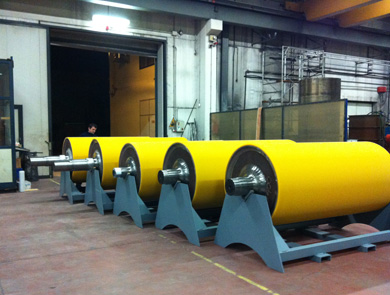
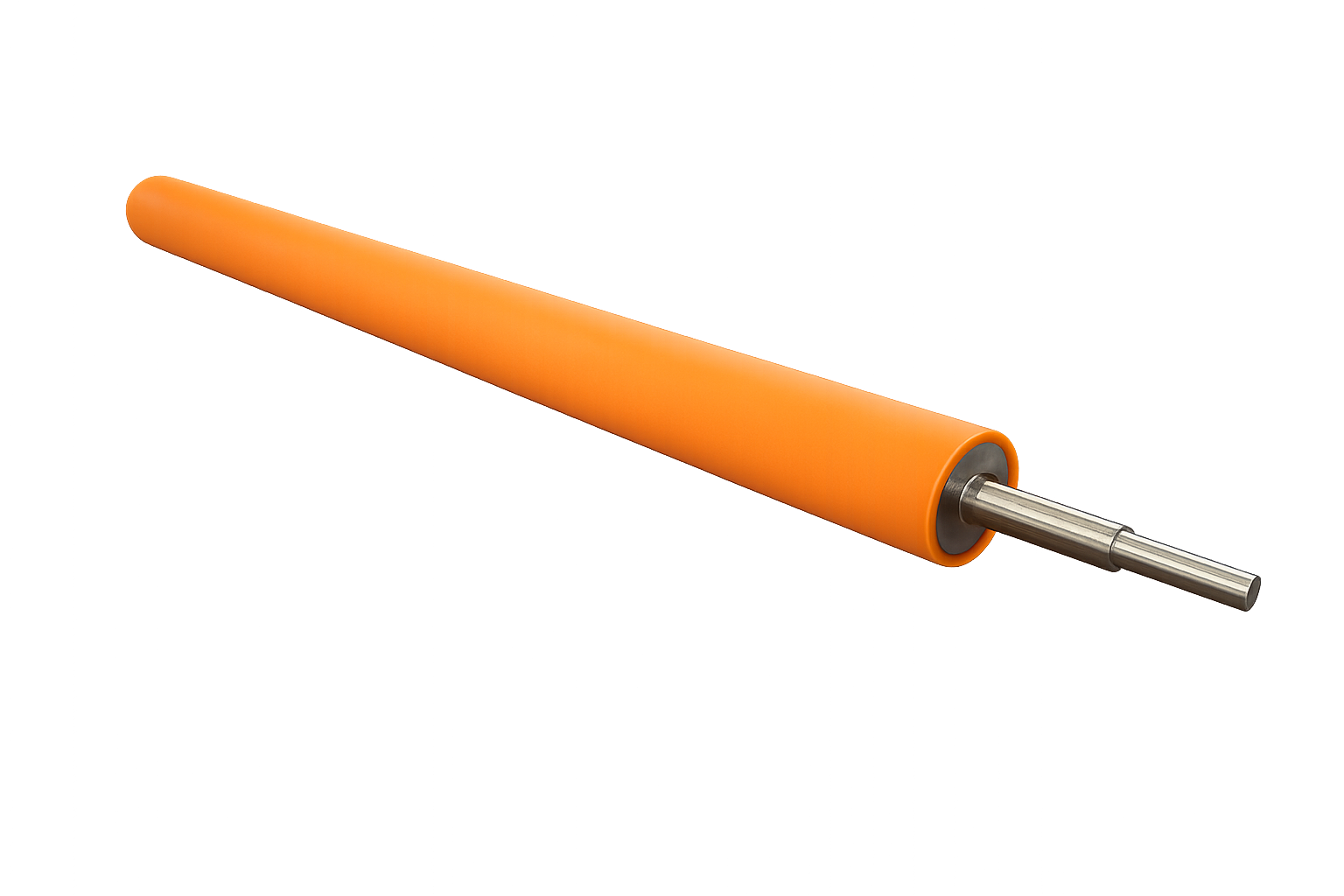
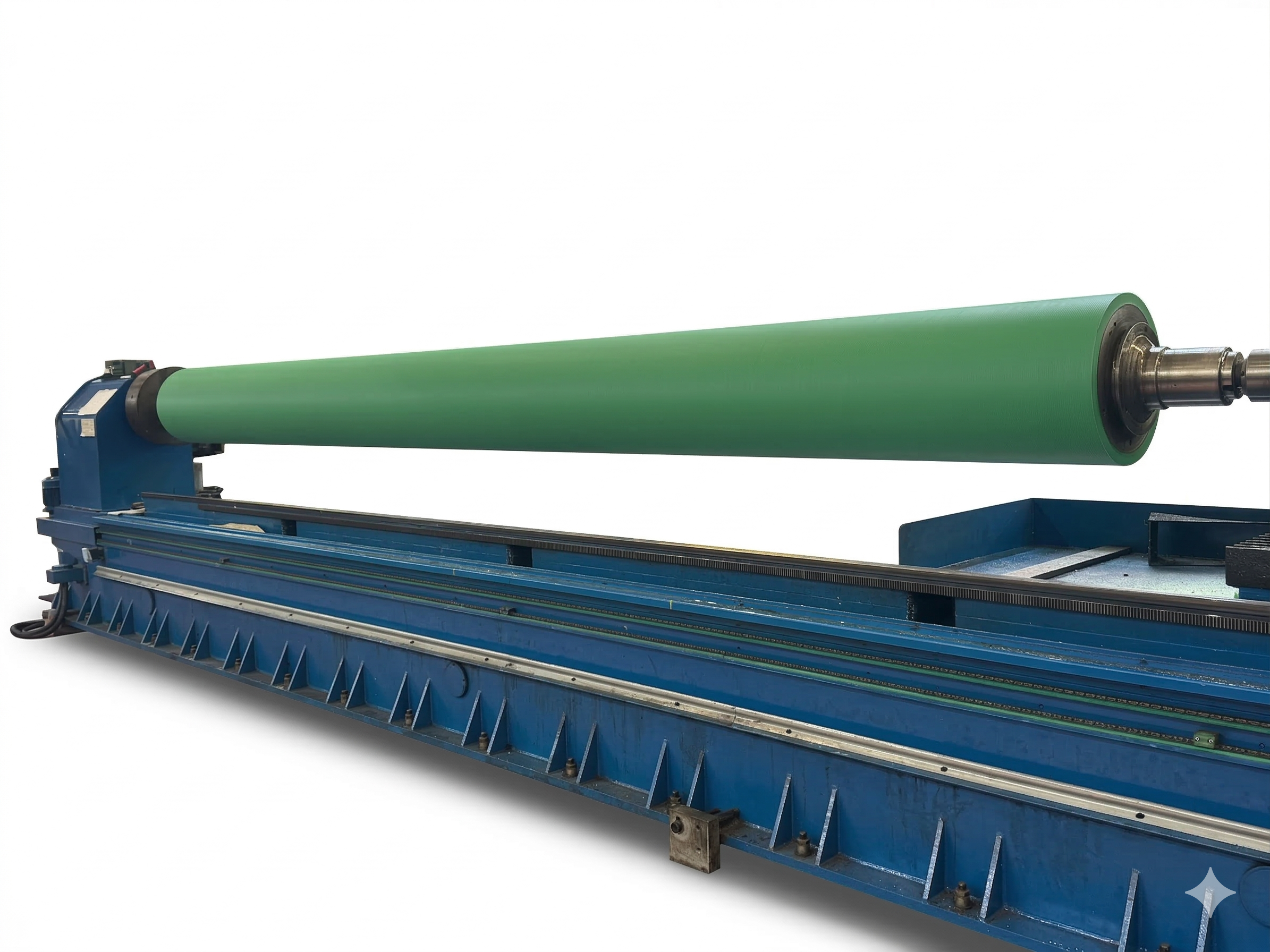
The range includes pull and nip rollers, coating and laminating rollers, anti-wrinkle spreader rollers, corona treatment rollers, and antistatic or conductive solutions for managing electrostatic charges on the film, among others.
Why choose A.Piovan?
The ability to formulate compounds dedicated to each stage of the process (extrusion, laminating, embossing, printing) makes it possible to precisely meet the speed, web tension, and surface quality requirements demanded by plastic film machine manufacturers and processors.
Typical applications and compounds
60-80 Shore A compounds with excellent ozone resistance and nip stability even under demanding operating conditions
Single or dual hardness covering, with grooves to spread the film
Standard, antistatic, or conductive compounds depending on position and material processed
Rubbers from 40 to 90 Shore A, also available in antistatic versions, for monolayer and multilayer film
Stable electrical insulation and resistance to high ozone concentrations
Conductive or semi-conductive coverings for ESA printing systems
Technical insight
In plastic film, controlling web tension during transverse stretching is the most critical factor: nip rollers must maintain a stable contact point even under the most demanding conditions. Static electricity management also plays a central role, both in corona treatment rollers and in the antistatic and conductive coverings of other critical positions.
- Crowned-profile grinding: corrects roller deflection caused by its own weight or by web tension, evenly distributing contact pressure across the full width of the film
- Curved (banana) spreader rollers: curved metal shaft with a rubber sleeve, to reduce tension differences between the center and edges of the film (“floating edges” effect)
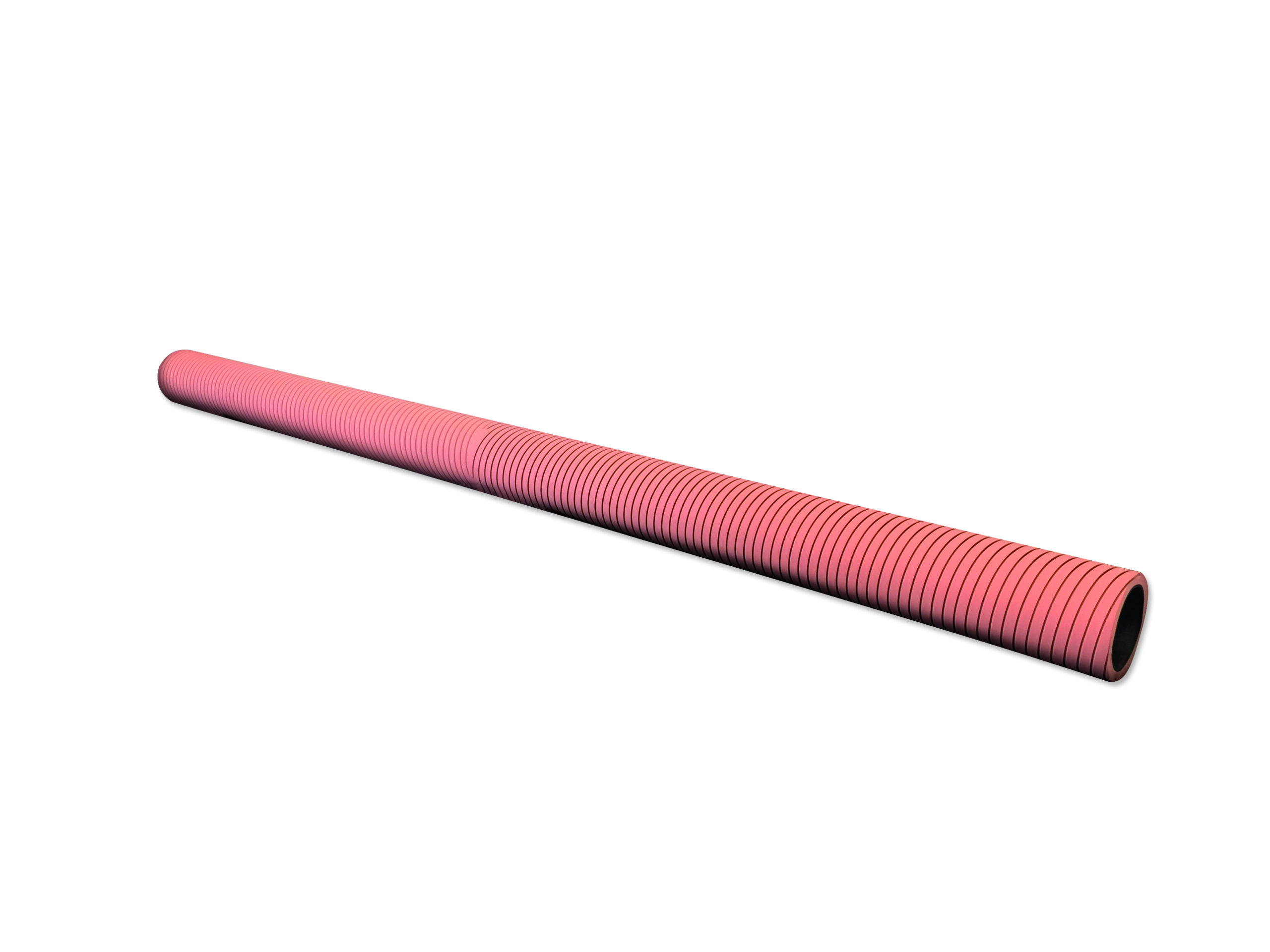
- Diamond-grooved or notched profiles: to eliminate air trapped between the film and the roller, used before winding or cutting
- Rollers for flat-die extrusion, blown film, and laminating: coverings from 40 to 95 Shore A, with non-stick finishes where required
- Hot embossing rollers (150-200°C): for holographic applications, security labels, and gift wrapping
- Coverings with controlled resistivity: antistatic range (10⁴-10⁸ Ω·cm) or conductive range (below 10⁴ Ω·cm)
- Insulating, conductive, or semi-insulating gravure sleeves: for managing electrostatic charges in ESA printing systems on plastic film
Products
- All
- Metal Rollers
- Polyurethane Roller Coverings
- Rubber Roller Covering
- All
- Metal Rollers
- Polyurethane Roller Coverings
- Rubber Roller Covering
Paper and Tissue-
Packaging-
Metal Sheet