
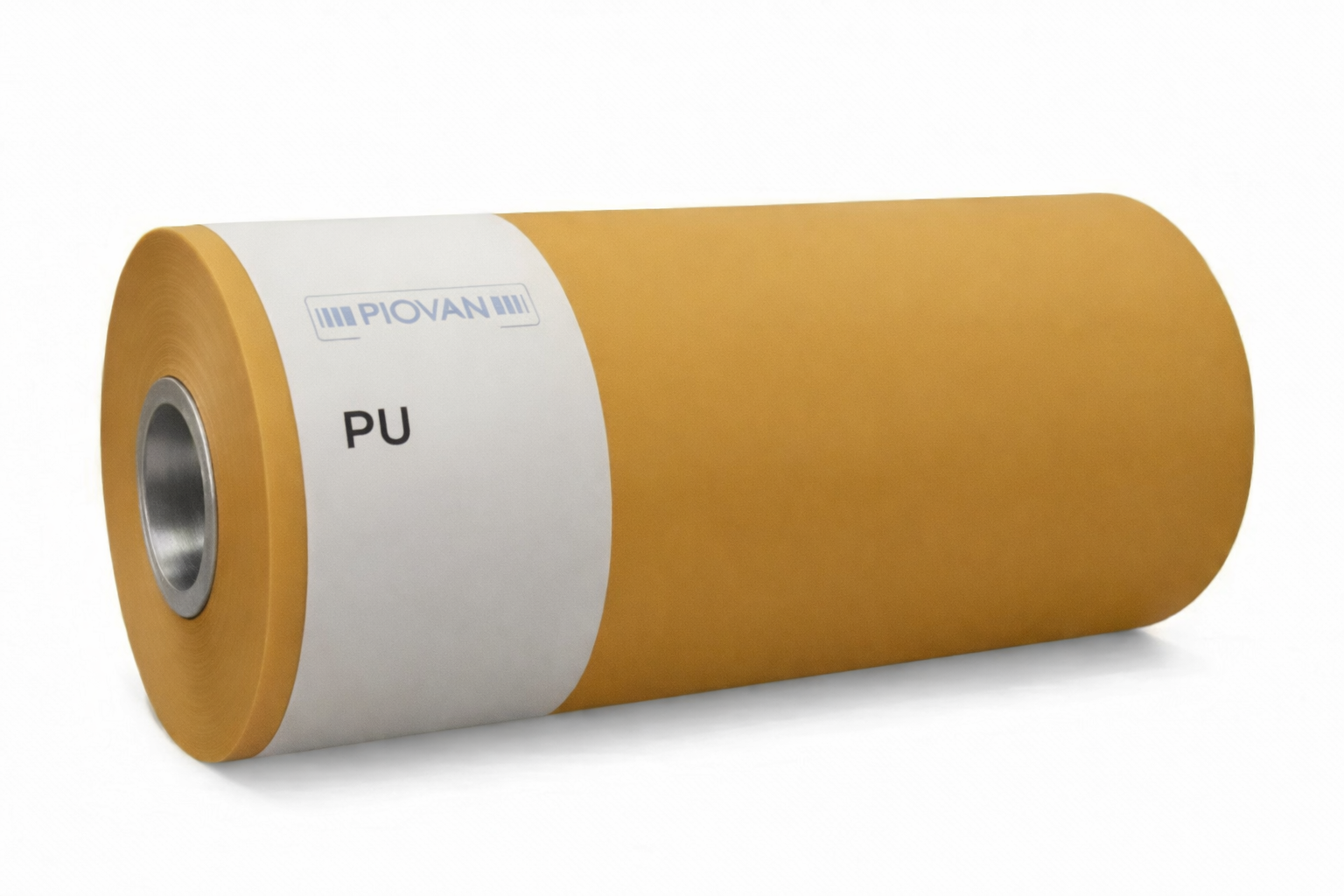
POLYURETHANE (Polyurethane Elastomer)
If we want to analyze the distinctive characteristics of polyurethane (PU), highlighting why it differs drastically from conventional elastomeric compounds, let’s consider its:
- Unmatched Abrasion Resistance: Polyurethane is the absolute benchmark for mechanical durability, offering scuff and wear resistance that can exceed that of natural rubber or NBR by 5-10 times, making it irreplaceable for industrial wheels, rollers and scrapers .
- High load capacity and elastic modulus: Unlike common compounds, PU combines the flexibility of rubber with the structural rigidity of plastics, allowing it to withstand heavy loads and high pressures without permanent deformation, covering a very wide hardness range (from 10 Shore A to 75 Shore D).
- Exceptional mechanical strength: This compound is distinguished by extremely high tensile and tear strength values, ensuring structural integrity even in the presence of cuts or extreme mechanical stresses that would cause the immediate failure of other elastomers.
- Chemical Specialization Against Hydrolysis: While it excels in resistance to oils and hydrocarbons, polyurethane requires a precise selection between polyester formulations (for maximum mechanical resistance) and polyether polyurethane (specifically designed to resist hydrolysis in humid environments or with hot water), distinguishing itself for this selective chemical sensitivity.
General Features
The mechanical performance of polyurethane places it at the top of the category of technical elastomers.
Working temperature: the material operates effectively between -30°C and +80°C, with special formulations reaching +110°C, although it suffers constant heat more than vulcanized materials
Hardness range: It is the widest in the industry, covering applications from soft rollers (30-40 Shore A) up to semi-rigid structural components (70 Shore D).
Abrasion resistance: It is excellent and represents the absolute benchmark: the loss of volume in the tests is minimal compared to any synthetic rubber
Tensile strength: It is impressive, ranging between 25 and 50 MPa , with a tear strength (50-120 kN/m) that allows the material to withstand cuts and impacts without failing.
Load Bearing Capacity : PU supports much higher weights with the same cross-section compared to natural rubber.
Compression set: This is considered good to moderate, with performance tending to degrade rapidly if operating temperature limits are exceeded.
Resistance to air and oxygen: Resistance to aging in air is excellent. The material does not undergo significant oxidative degradation at room temperatures and retains its elastic and surface properties much longer than diene elastomers (such as NR or SBR), making it reliable for long-lasting mechanical components.
Resistance to UV light and photooxidative agents : Polyurethane exhibits moderate resistance to UV rays. If exposed directly to sunlight without stabilizers, it may experience cosmetic yellowing and, over time, a slight loss of surface properties. However, the addition of pigments (such as carbon black) or specific UV stabilizers brings resistance to good levels, sufficient for most non-critical outdoor applications.
Ozone resistance: Ozone resistance is considered excellent. Unlike natural rubber or nitrile, polyurethane is inherently resistant to ozone attack and does not develop surface cracks even under high concentrations or prolonged mechanical stress. This property makes it ideal for external seals and electromechanical components.
Solvent resistance: Resistance to aliphatic hydrocarbons (hexane, heptane) is excellent, while it is only moderate to aromatic hydrocarbons (toluene, xylene). The material is incompatible with polar solvents (acetone, MEK), chlorinated solvents, and concentrated alcohols, which cause swelling and degradation of the polymer structure.
Resistance to petroleum, fuels, and hydrocarbons: Polyurethane (especially polyester) offers excellent resistance to mineral oils, lubricating greases, and diesel fuels. Resistance to gasoline is good, although slight swelling may occur. It is also highly resistant to hydraulic fluids, making it the preferred material for rod seals in high-pressure hydraulic cylinders.
Resistance to water and other chemicals: This is the material’s most critical aspect: resistance to hot water and steam is poor for polyester types (risk of hydrolysis above 50-60°C) and only moderate for polyether types. Resistance to strong acids and bases is also poor. Conversely, the material performs well with vegetable oils and has moderate resistance to common refrigerants, as long as temperatures remain within operating limits.
Want to learn more about other tires? Click here.
You might be interested
Request a quotation
id prod->8274
nome prod->POLYURETHANE (Polyurethane Elastomer)
id prod->8274
nome prod->POLYURETHANE (Polyurethane Elastomer)