
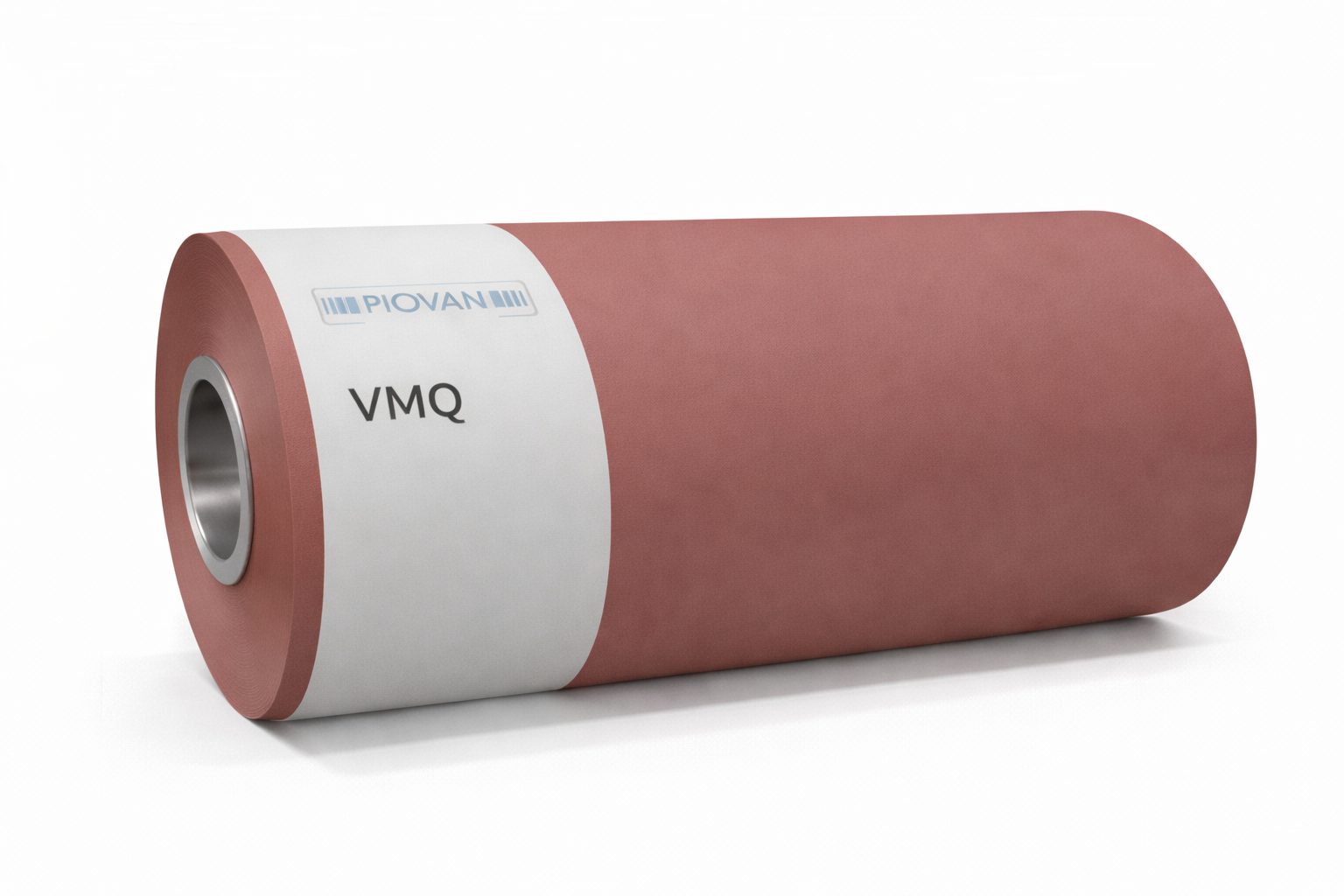
VMQ (VMQ Elastomer — Silicone)
If we want to summarize the distinctive characteristics of silicone (VMQ), highlighting its unique nature compared to carbon-based elastomers, we can say that:
- Extreme Temperature Resistance: Silicone is distinguished by the widest operating temperature range of common elastomers, maintaining exceptional flexibility down to -60°C and consistent thermal stability up to +200°C (with peaks of +250°C ), conditions that would cause most other compounds to become brittle or decompose.
- Chemical inertness and biocompatibility: Thanks to its molecular structure based on silicon and oxygen chains (rather than carbon), it is an intrinsically non-toxic, odorless and tasteless material, making it the choice of choice for medical, pharmaceutical and food applications where purity is a critical requirement.
- Electrical insulation and environmental stability: It features superior dielectric properties and complete resistance to ozone, UV rays, and atmospheric agents; unlike organic rubbers, it does not undergo the hardening or cracking typical of outdoor aging, guaranteeing a decades-long life under direct exposure.
- Static Specialization and Low Surface Energy: Although not suitable for intense dynamic mechanical stresses (such as abrasion or cutting), silicone excels at static seals thanks to an excellent compression set and its non-stick nature, which prevents bacterial growth and makes cleaning easier.
General Features
The mechanical performance of silicone is characterized by great constancy as the temperature varies, although the absolute values are moderate.
Working temperature: this is its distinctive feature: from -60°C to +200°C for standard grades, extending from -115°C to +300°C for special grades.
Hardness range: It is very flexible, ranging from 10 to 90 Shore A, allowing the creation of extremely soft or very rigid components.
Abrasion resistance: This is classified as poor, making silicone unsuitable for components subject to continuous rubbing.
Tensile strength: It is moderate (usually between 5 and 10 Mpa
Tear resistance : which is lower than NR or PU; however, there are “high- tear ” grades that significantly improve this parameter.
Compression set: Considered good to excellent (10–25% at 150°C/22h), ensuring excellent elastic memory even after prolonged compression at high temperatures.
Dielectric properties: Excellent and stable across the entire temperature range, making VMQ a first-order insulator for power electronics.
Resistance to air and oxygen: Resistance to aging in hot air is excellent and represents the industry standard. VMQ does not suffer from the hardening or embrittlement typical of organic rubbers, even after years of exposure to high temperatures, maintaining its mechanical functionality unchanged.
Resistance to light (UV) and photooxidative agents : Resistance to UV rays and solar radiation is virtually complete. Silicone does not degrade, significantly discolor, or lose elasticity under direct sunlight, making it ideal for architectural seals, exposed aircraft components, and outdoor instrumentation that must last decades without maintenance.
Ozone resistance: Ozone resistance is considered excellent. Because it lacks carbon-carbon double bonds in the backbone, silicone is intrinsically immune to ozone attack. It exhibits no surface cracking even in the presence of electrical discharges (corona discharge) or high concentrations of industrial ozone, surpassing almost all other elastomers in this regard.
Solvent Resistance: Standard silicone exhibits poor resistance to aliphatic and aromatic hydrocarbons, as well as chlorinated solvents, which cause extreme swelling and loss of mechanical properties. However, it offers excellent resistance to alcohols and good compatibility with polar solvents such as acetone. For solvent and hydrocarbon applications , Fluorosilicone (FVMQ) is recommended , which combines the thermal resistance of VMQ with the chemical resistance of FKM.
Resistance to petroleum, fuels, and hydrocarbons: The standard VMQ grade has poor resistance to mineral oils and fuels. It can withstand occasional contact with high-aniline oils, but is not suitable for permanent immersion. However, it exhibits excellent resistance to vegetable oils and animal fats, making it ideal for the food industry. As specified, FVMQ is the only silicone grade with excellent resistance to gasoline and hydraulic oils.
Resistance to water and other chemicals: Silicone boasts excellent resistance to water and moisture. It is compatible with hot water and low-pressure steam (up to 120°C), although prolonged exposure to high-pressure steam may cause hydrolysis. It also has excellent resistance to dilute acids and bases, saline solutions, and biodegradable hydraulic fluids. Its complete inertness to biological fluids is crucial, ensuring its certified biocompatibility for surgical and pharmaceutical use.
Want to learn more about other tires? Click here.
You might be interested
Request a quotation
id prod->8291
nome prod->VMQ (VMQ Elastomer — Silicone)
id prod->8291
nome prod->VMQ (VMQ Elastomer — Silicone)