
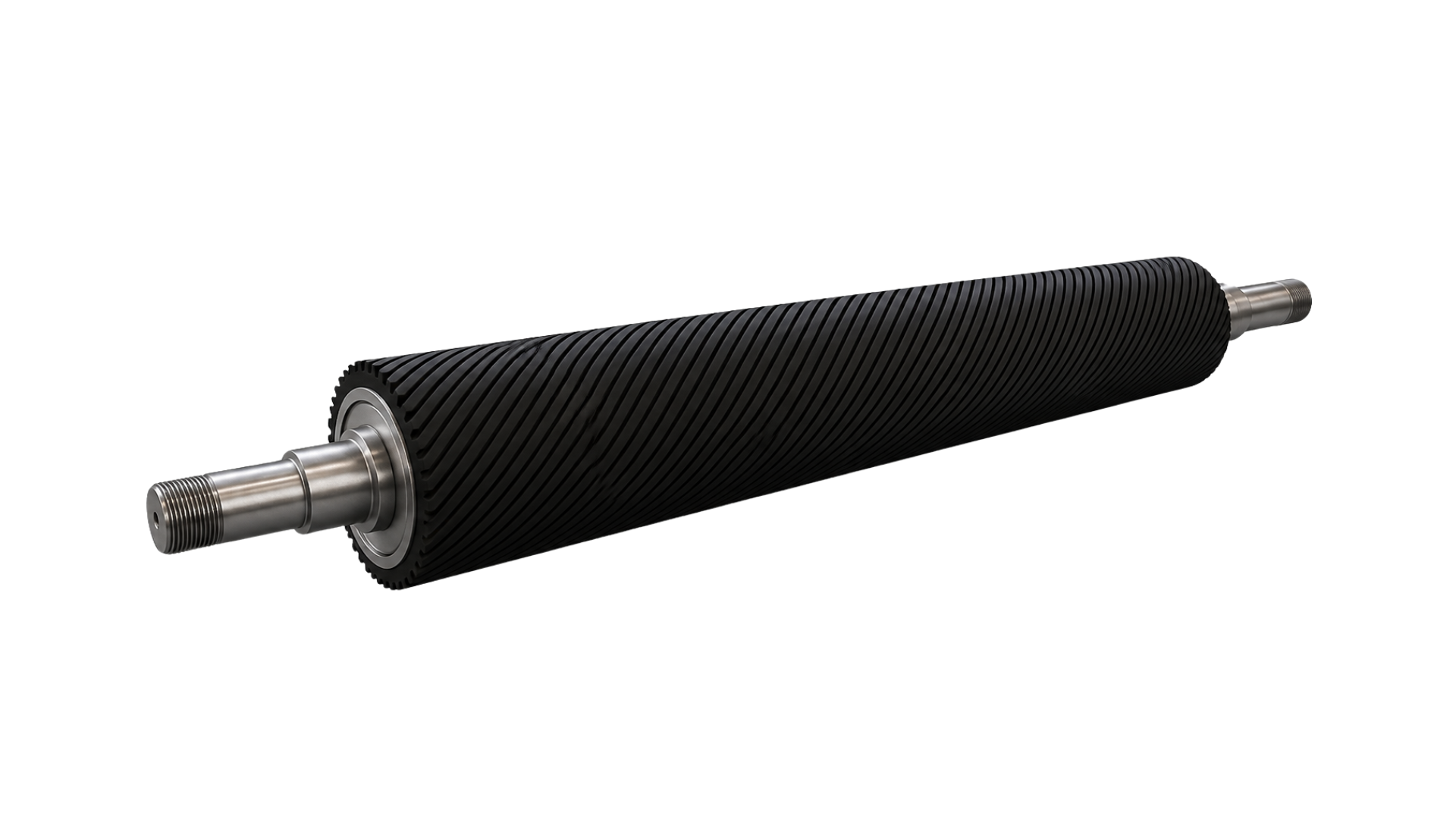
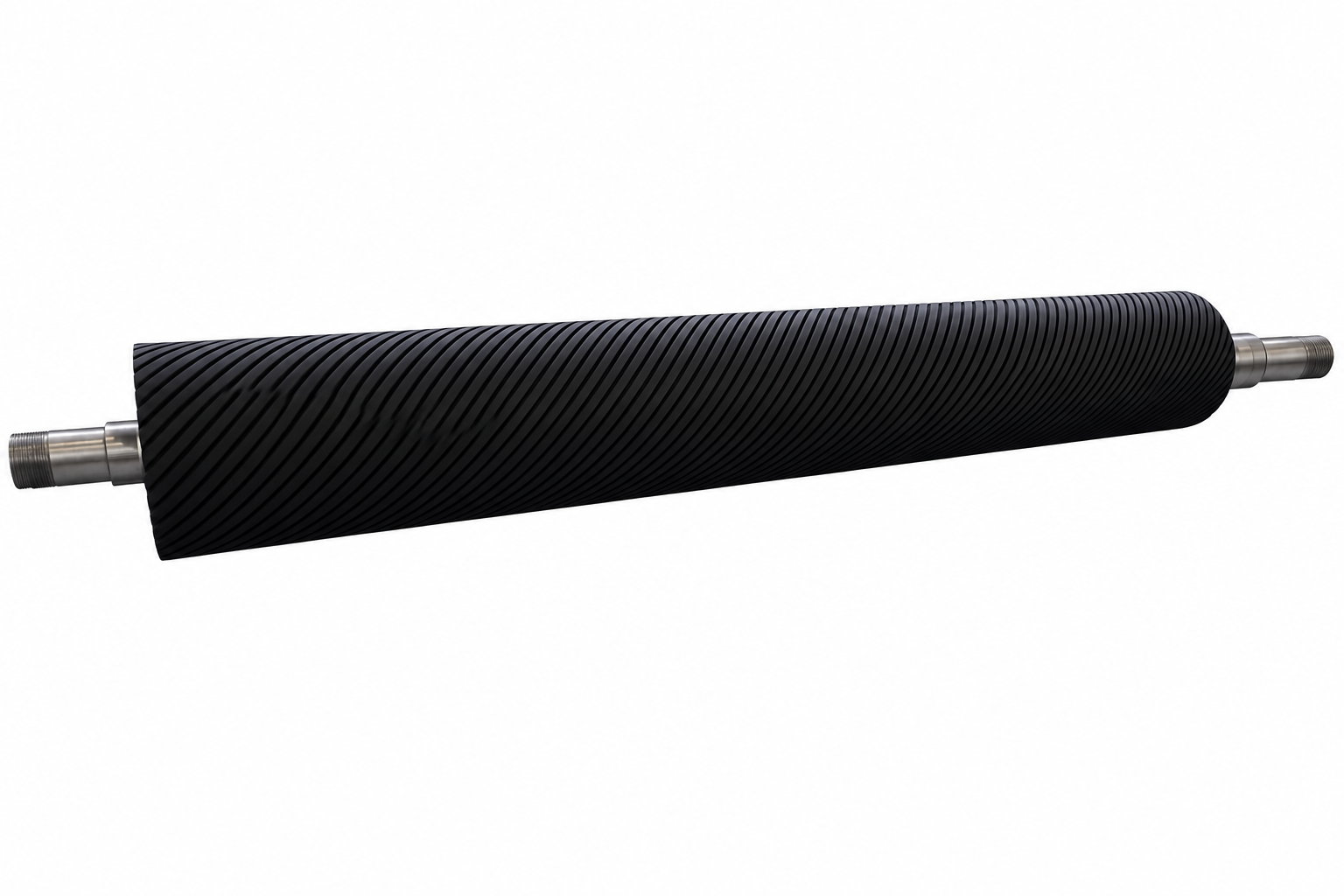
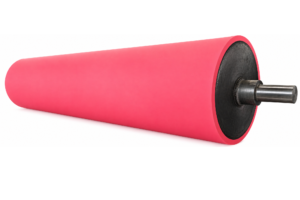
Rubber coating for feed rollers on sandpaper sander
In industrial belt sanders, the feed roller is one of the most heavily stressed mechanical components and, at the same time, one of the least visible outside the production environment.
The abrasive belt continuously runs over it, often at high speeds and under constant tension, to ensure uniform calibration and finishing on wood, panels, metals, or composite materials.
The rubber coating applied to these rollers is therefore not just a simple protective layer: it is a technical component designed to directly determine the quality of the machining process, the belt’s service life, and the machine’s overall efficiency.
The roller body is generally made of steel, but steel in direct contact with the abrasive belt would generate poor grip, vibrations, and uneven wear of the belt itself. The rubber coating performs several functions at the same time:
- It increases grip between the roller and the belt, preventing slippage that would compromise traction and the precision of material feed.
- It absorbs vibrations generated by high-speed rotation, improving belt stability and surface finish quality.
- It uniformly distributes contact pressure across the entire width of the belt, preventing localized overheating and tearing.
- It protects the abrasive belt from overly rigid contact, extending its service life.
A spiral (or helical) groove is engraved on the rubber surface of the roller to meet specific functional needs:
- Dust and residue evacuation: large amounts of abrasive dust and processing residue are generated during sanding. The helical grooves create release channels that allow this residue to be expelled laterally, preventing it from accumulating between the roller and the belt.
- Cooling of the contact surface: the groove increases the surface exposed to air, promoting the dissipation of heat generated by continuous friction.
- Control of pressure and grip: the spiral pattern, compared to straight or crossed grooves, distributes contact progressively, reducing the risk of marking (“line marks”) on the machined material and improving belt traction without compromising its flatness.
- Noise and vibration reduction: the non-uniform, progressive contact typical of the helical groove cushions impacts compared to a completely smooth surface, contributing to quieter, smoother operation.
The choice of rubber compound and its hardness grade is crucial to the roller’s performance. At A.Piovan we recommend the compound based on:
- Type of material being processed (softwood, hardwood, MDF panels, metals, composite materials);
- Operating speed of the machine and belt tension;
- Resistance requirements against wear, oils, solvents, or high temperatures;
- Required level of grip, in relation to the need for cutting uniformity.
A coating that is too soft can cause excessive deformation and loss of precision, while one that is too hard reduces the ability to absorb vibrations and increases the risk of marks on the machined surface. The optimal choice is always a compromise designed according to the specific application. The combination of the selected compound, hardness, groove geometry, and machining precision directly determines the quality of the surface finish, the service life of the abrasive belt, and the machine’s overall production efficiency.
You might be interested
Request a quotation
id prod->9118
nome prod->Rubber coating for feed rollers on sandpaper sander
id prod->9118
nome prod->Rubber coating for feed rollers on sandpaper sander